How Long Until Stress Hair Loss Stops (and Regrows)?
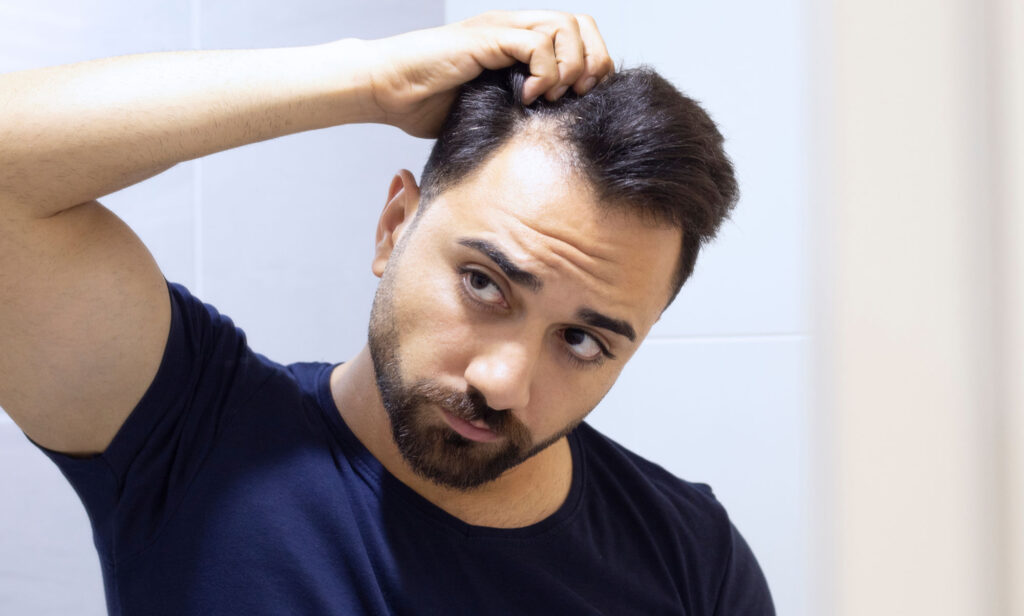
Sudden hair shedding after illness, burnout or a tough life event is common, but the good news is that it’s usually temporary.
This is telogen effluvium, a stress response that settles once the trigger eases. Below, we answer the big question:
Can it grow back?
Read on as we map the timeline for when shedding slows, when regrowth starts and what speeds recovery.
Yes, stress-induced hair loss usually grows back. Shedding often starts 6 to 12 weeks after the stressful event and starts to slow down within 3 to 6 months, once the trigger eases. New growth, which shows as short, soft baby hairs, appears by 3 to 4 months, with visible fill-in by 6 to 12 months.
More About Stress-Induced Hair Loss
Stress hair loss is usually telogen effluvium, a temporary shift in the hair cycle after a shock to the system, such as illness, fever, surgery, major stress or a crash diet with rapid weight loss.
More hairs enter the resting phase together, so shedding ramps up weeks later. It looks like diffuse hair loss, not patchy and hair strands are of normal thickness — you’ll just see more of them in the brush, drain or on your pillow. This differs from female pattern hair loss, which shows a widening part and gradual thinning at the crown. The good news? Once the trigger settles and basics are in place, shedding usually eases and regrowth follows.
It’s important to see your GP if shedding is happening in patches, is painful with rashes or lasts longer than six months.
Signs Stress Hair Loss is Improving
✓ You’re seeing fewer hairs in the brush, drain and on the pillow week to week
✓ Your part isn’t widening and may look a touch denser in photos
✓ A soft halo of new baby hairs appears around the hairline/crown that looks short, tapered and a bit fluffy
✓ Your ponytail feels the same or slightly thicker instead of shrinking
✓ Wash days feel less dramatic — the shed spikes early, then tails off
✓ Any scalp tenderness and itching from over-styling settles
✓ Overall, shedding stabilises, and regrowth becomes easier to spot in consistent, same-light monthly photos
What Speeds Recovery
Stress shedding usually settles on its own, but you can help the cycle reset faster. Here’s how to stack the odds in your favour.
Remove the trigger
Tackle what set the shedding off in the first place wherever you can. Pace heavy workloads, protect sleep and skip crash dieting, opting for a sustainable diet with slower weight loss. If the trigger was illness or surgery, focus on steady recovery and realistic timelines rather than quick fixes.
Nutrition that fuels growth
Hair needs enough energy and protein to regrow. So aim for protein at each meal and don’t undereat. Ask your GP to check ferritin and vitamin D, then correct low levels under medical guidance. This creates the conditions for stronger, more consistent regrowth.
Evidence-based helpers
Consider topical minoxidil (if you’re suitable) to shorten the regrowth lag and support density while the cycle resets. Some people add PRP and LLLT treatments as an adjunct and use them consistently to prevent more shedding and boost new growth.
Gentle styling & scalp care
Treat hair kindly while it recovers. That might look like keeping heat and bleach to a minimum, loosening tight styles and extensions and detangling with conditioner rather than pulling a comb through when dry and knotty. If you have dandruff or irritation, treat it promptly to keep the scalp calm and comfortable.
Medication & health review
Run through recent medication changes with your clinician and flag thyroid symptoms, heavy periods or rapid weight loss as these can prolong shedding. Addressing any underlying hormone issues will speed up the turn from shedding to regrowth.
Track progress
Take monthly photos of your part and crown in the same spot with the same lighting. Comparing like-for-like images is far more reliable than guessing and it helps you spot early ‘baby hairs’ and subtle density gains.
Sleep & stress basics
Regular sleep, light daily movement, a healthy diet and simple breathwork or CBT techniques reduce ongoing stress signals. Lowering your background stress means fewer new triggers and a much smoother path back to thicker hair.
When Hair Loss is NOT Just Stress
Check in with a professional if hair loss is patchy, your part and temples are widening quickly or your scalp is sore or very itchy.
Seek help if shedding lasts beyond six months, postpartum shedding hasn’t eased by six months or you notice eyebrow and eyelash thinning too. Hair loss alongside acne or irregular periods, recent medication changes or visible scarring and shine at the hairline also need review.
Start with your GP or your local trichologist and ask about basic labs to rule out common causes and guide you on the best treatment possible.
Say Goodbye to Stress for Healthier Hair
Stress shedding is unnerving, but it’s usually temporary.
Once the trigger eases, the hair loss levels reduce and shorter new hairs will follow. You can help the process along by removing obvious stressors, eating enough (especially protein), keeping styling gentle and considering evidence-based options like minoxidil if it’s right for you.
You can even book in for professional PRP and LED hair treatments to help stabilise and boost hair growth.
If hair loss is patchy, painful, rapidly worsening or still ongoing months later, book your GP and ask for blood tests, particularly for ferritin, thyroid and vitamin D.