What Hormones Affect Hair Growth?
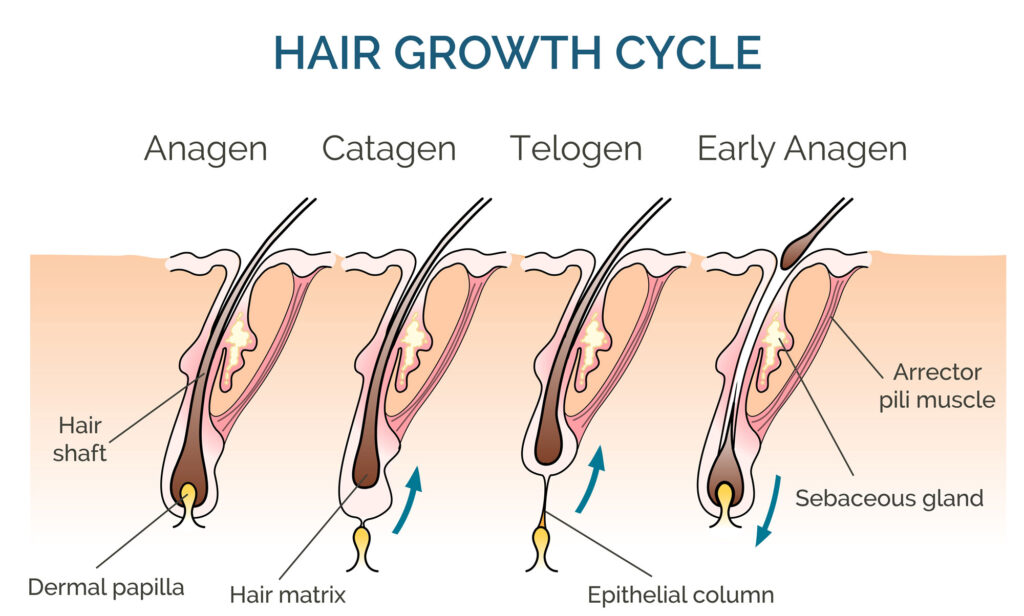
Hair growth is one of the most visible ways your body shows what’s happening inside.
Your hair responds to changes in the body’s chemistry, and when hormone levels rise or fall, hair can behave differently. You might notice it feeling finer, duller, drier, greasier or not growing as it used to.
This article discusses how hormones influence hair growth and what those changes can reveal about your overall health.
Yes. When hormones fall out of balance, they can disrupt the rhythm of hair growth because follicles depend on those signals to produce new strands and keep existing ones healthy. But if those signals change due to issues like PCOS, thyroid problems, menopause, pregnancy or ongoing stress, hair will react. It may start coming out more easily in the shower and when brushing or take longer than usual to recover after shedding.
Once hormone levels return to a healthy range, hair growth usually stabilises again.
6 Hormones That Affect Hair Growth and Loss
Balanced hormones keep hair thick and consistent, with relatively low hair fall. But when that balance changes, the growth pattern changes in different ways, depending on which hormones are involved.
Below are the main ones that have the biggest impact on how hair behaves:
Androgens
Androgens are often described as ‘male hormones’, but women also produce them. Testosterone is converted to a more potent form, dihydrotestosterone (AKA DHT), which alters how follicles function.
In some people, the follicles on the scalp are sensitive to DHT. That sensitivity causes follicles to shrink over time, leading to shorter, finer strands and, eventually, thinning areas.
On the other hand, DHT promotes thicker body and facial hair growth, which is why hormonal changes can create uneven patterns of hair growth and shedding.
Estrogen
Estrogen supports longer growth phases to maintain fuller hair. Higher levels tend to keep follicles active for longer (which is why hair often looks thicker during pregnancy). Unfortunately, when estrogen levels fall, as they do after childbirth or during menopause, that protection fades. More follicles enter their resting phase all at once, resulting in a noticeable shed or a gradual reduction in volume.
Progesterone
This hormone works alongside estrogen to prevent excess androgen activity, helping protect scalp follicles and keep hair thick and full. When progesterone levels drop, androgens can become relatively stronger in effect, which contributes to thinning around the crown or hairline. Hormonal birth control, perimenopause and certain health conditions can all influence this balance.
Thyroid Hormones
Thyroid hormones (T3 and T4) influence the rate of cell division within hair follicles. Both an underactive thyroid (AKA hypothyroidism) and an overactive one (AKA hyperthyroidism) can slow the production of new hairs. Diffuse thinning rather than patchy loss is the result of this imbalance. And because thyroid hormones affect every cell in the body, hair is often one of the first places to show that something isn’t quite right.
Cortisol
Cortisol is known as the stress hormone and is released when the body is under prolonged pressure. Interestingly, it is good for you in short bursts, helping you you cope, but in constant supply, it disrupts normal biological rhythms, including hair renewal. High cortisol levels can push a large number of follicles into a resting or shedding state at the same time, a condition known as telogen effluvium. Managing stress and supporting recovery time can do wonders to reverse that pattern.
Insulin and Other Metabolic Hormones
Insulin interacts with other hormones that influence hair, especially androgens. In conditions such as PCOS, insulin resistance can increase androgen activity and contribute to hair thinning on the scalp and excess growth elsewhere. Improving insulin sensitivity through diet, exercise and medical treatment often makes a visible difference in hair health, and ultimately, in its appearance.
Signs Your Hair Loss May Be Hormonal
These are some of the more common patterns and signals to watch for with hormone-related hair loss:
- Gradual thinning rather than sudden shedding. The overall density of your hair decreases over time instead of coming out in clumps.
- Reduced volume near the roots. Hair feels flatter or lighter on top, even if the ends still seem full.
- A widening part line or thinning around the crown. This is especially common in women and often linked to shifts in estrogen or progesterone.
- Receding hairline or patchy thinning at the temples. More typical in men but can appear in women with higher androgen activity.
- Changes in texture. New strands may grow in softer, finer or more brittle and frizzy than before.
- Slower regrowth with new hair being slow to appear or fill in thin areas after dramatic shedding.
- Excess hair on the face or body in women, which points to increased androgen levels, as seen in PCOS.
- Other physical changes, like irregular periods, acne, dry skin, fatigue or weight fluctuations, also accompany hormonal hair loss and can provide a clearer picture of what’s happening internally.
What It All Means for Hair Health
Hormones and hair are closely linked, but it isn’t always apparent until something changes. When hair starts changing out of nowhere, it’s usually responding to what’s happening elsewhere in the body. So, paying attention to those changes can reveal patterns that connect internal health with what you see on the surface.
Seeing hair loss in that context makes it easier to understand and to treat with a clear plan, whether that’s with diet or medication. Once your hormones are steady again, you can boost hair growth with specialist treatments like PRP, LLLT or a FUE transplant for better-looking hair sooner rather than later.