Facial Hair Transplants | Beard and Eyebrow Hair Transplants Explained
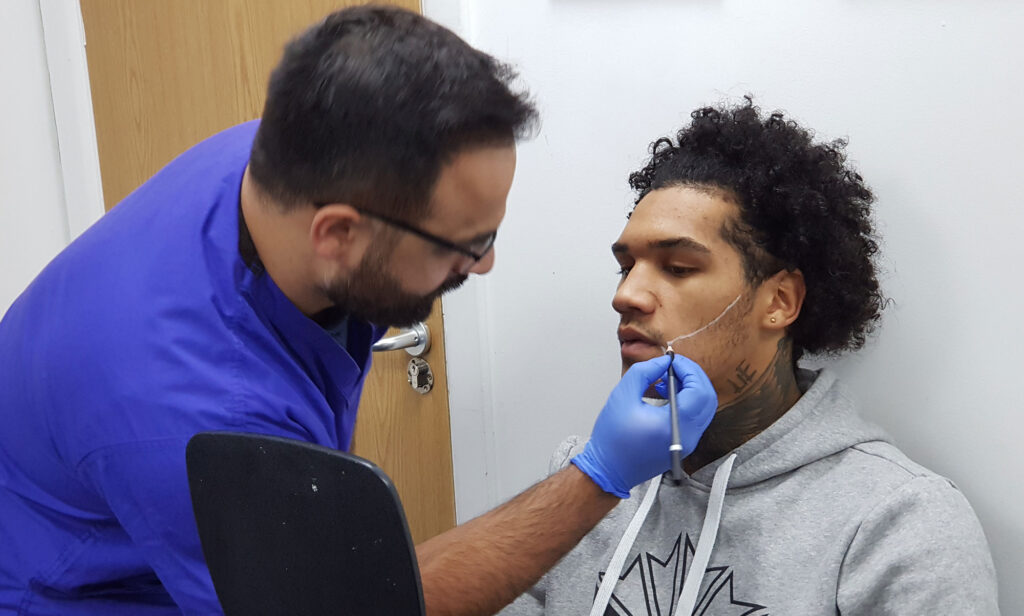
Whether you have patchy beard growth, scarring from an old injury or eyebrows that have thinned over time, a facial hair transplant can restore both density and confidence.
This guide covers how beard and eyebrow transplants work, what results to expect and what you need to know before booking.
A facial hair transplant is a surgical procedure that uses your own hair follicles to restore or enhance hair in the beard, moustache, jawline or eyebrow area. Results are permanent. Transplanted follicles behave like natural facial hair and can be styled as normal, including being shaved and shaped. The procedure is suitable for patchy growth, scarring from acne or injury, thinning caused by alopecia or over-plucking and patients who want more density than genetics have provided.
Beard Transplants
Beard transplants are one of the most requested facial hair procedures for men.
They work for a range of concerns, including patchy growth, complete absence of beard hair, scarring and uneven density across the jawline, chin or moustache area.
A full beard from scratch typically requires 1,500 to 2,500 grafts. Filling in patches or adding density to a specific zone, such as the chin or jawline, can be achieved with 500 to 1,000 grafts. Each follicle is placed at a precise angle to replicate the natural growth direction of beard hair, which determines whether or not the result looks natural.
Eyebrow Transplants
Believe it or not, eyebrow transplants actually follow the same FUE principle, though they require a higher level of precision given the size of the treatment area and the specific angle at which eyebrow hair grows. That’s why it’s important to find a skilled surgeon who will place each graft individually to mirror natural brow direction and density distribution.
Brow transplants are suitable for patients who have experienced thinning due to over-plucking, alopecia, thyroid conditions, scarring or genetics. And they’re also increasingly chosen by patients who want to enhance naturally sparse brows rather than fill them in with makeup daily.
Each brow typically requires 150 to 350 grafts, bringing the combined total to 300 to 700 grafts for both brows. But the exact number depends on your natural brow shape, the degree of thinning and the fullness you want to achieve, so make sure to talk with an expert before booking anything.
Facial Hair Transplant Recovery
Both procedures are performed under local anaesthetic and carried out as day treatments with no overnight stay required.
For beard transplants, redness and small scabs around the implanted follicles are normal in the first week. Most patients feel comfortable returning to work within three to five days. The transplanted hairs will shed at around two to four weeks, which is a normal part of the growth cycle. New growth typically becomes visible from three to four months, with the full result visible at twelve months.
Eyebrow hair transplant recovery is similar, though the treated area is smaller and any initial redness tends to resolve faster. That said, patients should avoid makeup on the brows for at least 2 weeks post-procedure.
Common Facial Hair Transplant Questions
Yes. FUE transplants use follicles from the permanent donor zone, meaning the results are long-lasting. The transplanted hair will continue to grow for life, just as the hair from the donor area.
Beard transplants will yes, because scalp donor hair tends to grow at a slightly faster rate than natural beard hair. Most patients find they adapt to this quickly. Eyebrow transplants may also need occasional trimming for the same reason.
The procedure is performed under local anaesthetic, so discomfort during treatment is minimal. Some tenderness in the donor and recipient areas is normal in the first few days.
A beard transplant typically takes four to eight hours, depending on graft count.
Anyone in good general health with sufficient donor hair and realistic expectations about the outcome. But a thorough consultation with an experienced surgeon will confirm suitability and allow them to plan the procedure around your facial structure and goals.
In experienced hands, yes. The key factors are graft placement angle, direction and density distribution. Facial hair grows at very specific angles, so accurately replicating those angles determines the final result. Make sure to review a surgeon’s before and after portfolio for facial hair cases specifically and whether they are strongly recommended before committing to any hair clinic.
Yes. Facial hair transplants are a well-established option for trans men who want to develop a natural beard or fill in areas where hormone therapy has not produced the density they want. The procedure is the same as for any other patient and the results are permanent. A consultation will allow your surgeon to plan around your facial structure and current hair growth to achieve the most natural outcome.
Interested in a facial hair transplant? Book a FREE consultation with our team for a personalised assessment and graft plan.